Close Alert Banner
Skip to Content
AccessibilityContact UsWebsite Feedback

View our Facebook Page View our Instagram Page

Donate

Lambton County Gallery Logo version

Donate Contact Us icon
  • Visit
    • What's On
    • Hours & Location
    • Tours
    • Accessibility
    • Frequently Asked Questions
    • Gallery Guidelines
    • Membership
  • Exhibitions
    • Current Exhibitions
    • Upcoming Exhibitions
    • Past Exhibitions
    • Virtual Exhibitions
    • Publications
    • Artist & Curator Submissions
  • Programming
    • Adult Programs
    • Youth Programs
    • Virtual Programs
    • Special Events
    • Specialized Programs
    • Tours
    • Learning
  • Collection
    • About the Collection
    • Donating Art
  • Join & Support
    • Donate
    • Become a Member
    • Volunteer
  • About
    • Acknowledgement of Ancestral Lands
    • Careers, Instructors & Internships
    • Contact Us
    • Hours & Location
    • Mandate, Vision & Guiding Principles
    • Press Room
  • Open new window to share this page via Facebook Facebook
  • Open new window to share this page via Twitter Twitter
  • Open new window to share this page via LinkedIn LinkedIn
  • Email this page Email

Memento

Email icon Back to Search
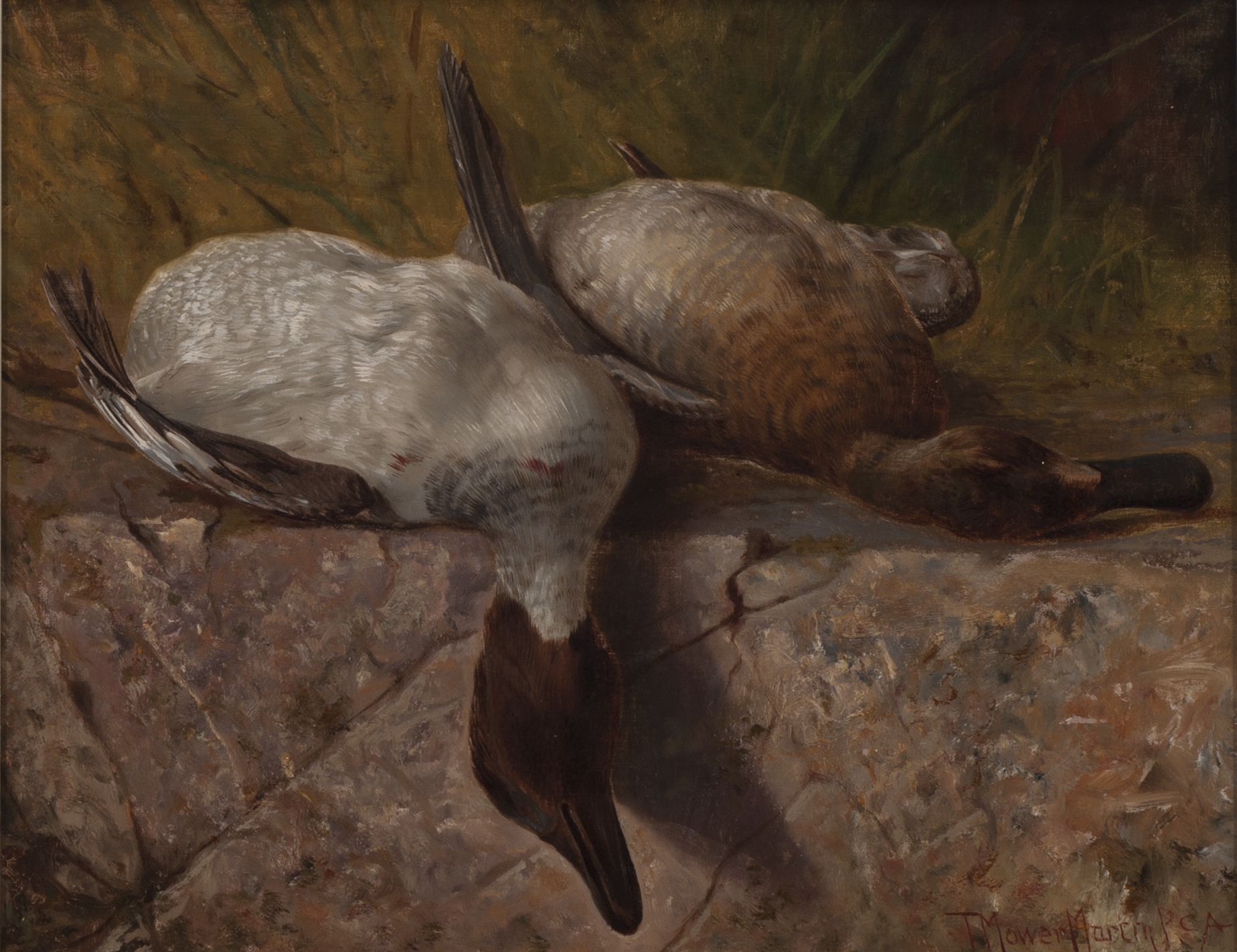
Thomas Mower Martin (1838–1934), Still Life, Dead Ducks, date unknown, oil on canvas. From the collection of the Judith & Norman Alix Art Gallery

Memento
October 2, 2026 – March 20, 2027

With roots in classical antiquity (700 BC to 500AD), the still life first emerged in Egyptian tombs as paintings of food, intended as means of providing sustenance in the afterlife. During the Middle Ages (c. 500–1500), objects appeared primarily within religious paintings, steeped in symbolism and guided by theological philosophy.

The still life genre flourished in the 17th century as demand for religious imagery declined and an emerging middle class became interested in purchasing art. Extravagant floral bouquets and banquet spreads gave way in the 18th century to domestic objects―simple fruit or bread―in intimate arrangements encouraging quiet contemplation.

The modernity of the 19th century radically shifted the focus from symbolism to perception, making the subject fertile ground for experimentation. Movements such as Impressionism emphasized light, colour, and the experience of seeing the still life, while Post-Impressionism flattened space and experimented with shape and spatial relationships. The Cubists furthered this investigation by presenting multiple viewpoints at once, exposing the painting as a constructed image rather than a transparent window onto reality.

By the 20th century, still life was refreshed with conceptual force, reemerging as a vehicle for commentary on consumption, identity, and the environment. A playground for technical skill and experimentation, still life maintains its importance in an artist’s practice today. Thousands of years later, it continues to provide sustenance―for the living.

Image credit: Thomas Mower Martin (1838–1934), Still Life, Dead Ducks, date unknown, oil on canvas. From the collection of the Judith & Norman Alix Art Gallery

Email iconSubscribe

About
    • Acknowledgement of Ancestral Lands
    • Careers, Instructors & Internships
    • Contact Us
    • Hours & Location
    • Mandate, Vision & Guiding Principles
    • Press Room
      Toggle Section Press Room Menu
      • Subscribe
      • Exhibitions

Contact Us

Subscribe to this page

ADMISSION IS ALWAYS FREE!!

Monday and Tuesday

Closed to the Public

Wednesday

11:00AM to 4:00PM

Thursday

11:00AM to 8:30PM

Friday

11:00AM to 4:00PM

Saturday

11:00AM to 4:00PM

Sunday

Closed to the Public

Lambton County Footer Logo

Discoveries That Matter Footer Logo

Our Partners

147 Lochiel Street Sarnia, Ontario N7T 0B4

Phone: 519-336-8127 Fax: 519-336-8128

Translate

Resources

  • Accessibility
  • Contact Us
  • Hours & Location
  • Privacy Statement
  • Sitemap
  • Subscribe to ENews
  • Terms of Use
  • Website Feedback

© 2020 Judith & Norman Alix Art Gallery

Designed by eSolutionsGroup

Close Old Browser Notification
Browser Compatibility Notification
It appears you are trying to access this site using an outdated browser. As a result, parts of the site may not function properly for you. We recommend updating your browser to its most recent version at your earliest convenience.